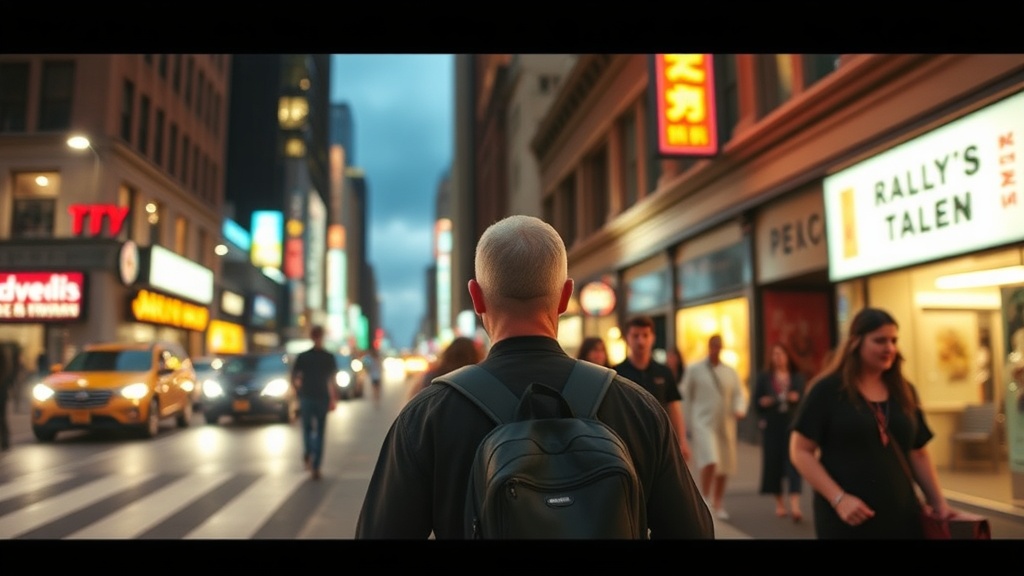
7 Realistic Ways to Find Your Center While Walking a Busy City Block

Recent studies from Stanford University revealed that walking can boost creative inspiration by an average of 60% compared to sitting. While many people think they need a dark room and a expensive velvet cushion to find peace, the truth is that movement is often a better entry point for a busy mind. Sitting still can feel like a chore—especially if you have a racing brain—but walking gives your body something to do while your mind learns to settle. This post covers seven ways to turn your daily commute or lunch break into a real mindfulness session without looking like a weirdo on the sidewalk (though in Winnipeg, we've seen it all anyway).
How can I meditate if I can't sit still?
The idea that meditation requires absolute stillness is one of the biggest myths in the wellness world. For many of us, forced stillness leads to more anxiety, not less. Kinetic meditation is a valid and powerful way to train your attention. When you walk, your brain has to process a steady stream of data: balance, pace, and obstacles. This actually makes it easier to stay in the present moment because you can't just float off into a daydream about your grocery list without tripping over a curb. It's about being active with your focus. You aren't trying to clear your head; you're trying to fill your head with the right things. Instead of worrying about a meeting, you're noticing the exact pressure on the ball of your left foot as it hits the concrete. It's a grounding exercise that happens in real-time. Research from Stanford University confirms that this type of movement changes how our brains function, opening up pathways that sitting simply doesn't touch.
1. The Heel-to-Toe Connection
Start by bringing your entire focus to the bottom of your feet. Most of us walk on autopilot, rushing from point A to point B as if the ground didn't exist. Try to feel the specific sequence of your step. Notice the heel strike, the roll through the arch, and the final push-off from the toes. It sounds simple, but it's incredibly hard to keep this focus for more than a block. When your mind wanders—and it definitely will—just bring it back to that physical sensation of the pavement meeting your shoe. Don't worry about your speed; just worry about the feeling. This is the foundation of any mindful movement. It anchors you to the physical world and stops the mental spinning that usually happens during a commute.
2. Soften Your Peripheral Vision
In a city environment, we tend to have 'tunnel vision.' We stare at our phones or fixate on the person walking too slowly in front of us. To practice mindfulness, try softening your gaze. Look toward the horizon but allow your peripheral vision to open up. Notice the shapes of the buildings, the colors of the cars, and the movement of the trees without labeling them as 'good' or 'bad.' You're just taking in the visual data. This shift in how you use your eyes can actually signal your nervous system to move out of 'fight or flight' mode. It's a physical hack for your brain. By seeing the bigger picture (literally), you remind yourself that you're just one small part of a much larger, moving world.
Is walking meditation as effective as sitting?
Many people worry they're getting a 'lite' version of meditation if they aren't on a mat, but that's not what the data shows. Experts at Harvard Health point out that walking meditation offers unique benefits for mental clarity and stress reduction. While sitting helps with deep introspection, walking helps with integration. It teaches you how to stay calm while life is happening around you. It's one thing to be peaceful in a quiet room; it's another thing to be peaceful while a bus is screeching nearby and someone is yelling into their phone. This is the kind of mindfulness that actually matters in the real world. You're building a muscle that you can use when you're stressed at work or stuck in traffic. It's practical, it's immediate, and it doesn't require any special equipment.
3. The 5-4-3-2-1 Grounding Adaption
You might know this technique for anxiety, but it works wonders for walking. As you move, identify five things you can see, four things you can hear, three things you can feel (like the wind or your jacket), two things you can smell, and one thing you can taste (or one thing you're grateful for). In a city like Winnipeg, the 'smell' part might be tricky depending on the season, but that's part of the honesty of the practice. The goal isn't to find a perfect environment; it's to be present in the one you have. This exercise forces your brain to switch from internal monologue to external observation. It’s an effective way to break a loop of negative thinking.
4. Sync Your Breath with Your Strides
This is where you get into a real rhythm. Try inhaling for four steps and exhaling for four steps. If that feels too fast, try six. The numbers don't matter as much as the consistency. By tying your breath to your physical movement, you create a closed loop of attention. Your body is moving, your breath is flowing, and your mind is counting. This leaves very little room for intrusive thoughts to sneak in. If you find yourself losing the count, don't get frustrated. That's just a sign that you're human. Just start over at 'one' on your next heel strike. It’s a gentle way to keep yourself on track without feeling like you're failing at being 'zen.'
What are the best techniques for mindful walking in a city?
Practicing in a city requires a different approach than walking in a forest. You have to be safe and aware of your surroundings while still maintaining an internal focus. One of the best techniques is to use the city's natural rhythms as 'mindfulness bells.' For example, every time you hit a red light, use that as a cue to take one deep, conscious breath. Instead of huffing and checking your watch, use those thirty seconds to check in with your body. Are your shoulders hunched? Is your jaw clenched? Relax them. According to the Greater Good Science Center, these small 'micro-moments' of awareness can have a cumulative effect on your overall stress levels throughout the day. You don't need a 20-minute block of time to make progress; you just need a few seconds here and there.
5. Listen Without Judgment
City noise is often seen as an enemy of meditation. We wear noise-canceling headphones to drown it out, but what if you used the sound instead? Try walking without music or podcasts for once. Listen to the layer of sounds: the hum of tires, the scrap of footsteps, the distant siren. Instead of thinking 'that noise is annoying,' try to hear it just as a vibration of air. It’s just sound. When you stop fighting your environment, your internal tension starts to melt away. You'll find that the city isn't nearly as stressful when you aren't constantly judging it for being loud. It's a busy place, and that's okay. You can be the quiet center of that busyness.
6. Practice Environmental Gratitude
This isn't about being cheesy; it's about shifting your focus. As you walk, look for one small thing that was designed well or looks interesting. Maybe it's the way the light hits an old brick building or the effort someone put into a small flower box on their balcony. Taking a second to appreciate something outside of yourself pulls you out of your own head. It reminds you that the world is full of small wins if you're actually looking for them. This practice helps build a more positive 'filter' for how you view your daily life. It’s a simple shift that makes a big difference over time.
7. The 'Stoplight Reset'
We've all been there: standing at a corner, fuming because we just missed the light. Instead of letting that ruin your mood, turn the stoplight into a meditation prompt. While you wait, do a quick scan of your body. Notice where you're holding tension. Maybe you're gripping your bag too tightly or your neck feels stiff. Let it go. Use the time to ground yourself before you start moving again. When the light turns green, make your first three steps incredibly slow and deliberate. It’s a way to hit the 'reset' button on your stress levels multiple times during a single walk. You'll arrive at your destination feeling much more collected than if you'd spent the whole time checking the countdown clock.
Walking meditation isn't a lesser form of practice; for many of us living in the real world, it's the most effective one. It bridges the gap between the quiet of a meditation mat and the chaos of daily life. You don't need a special outfit or a quiet room to find a moment of peace. You just need your feet, a sidewalk, and the willingness to pay attention to where you are right now. Next time you step outside, leave the phone in your pocket and see what happens when you're actually present for the walk.