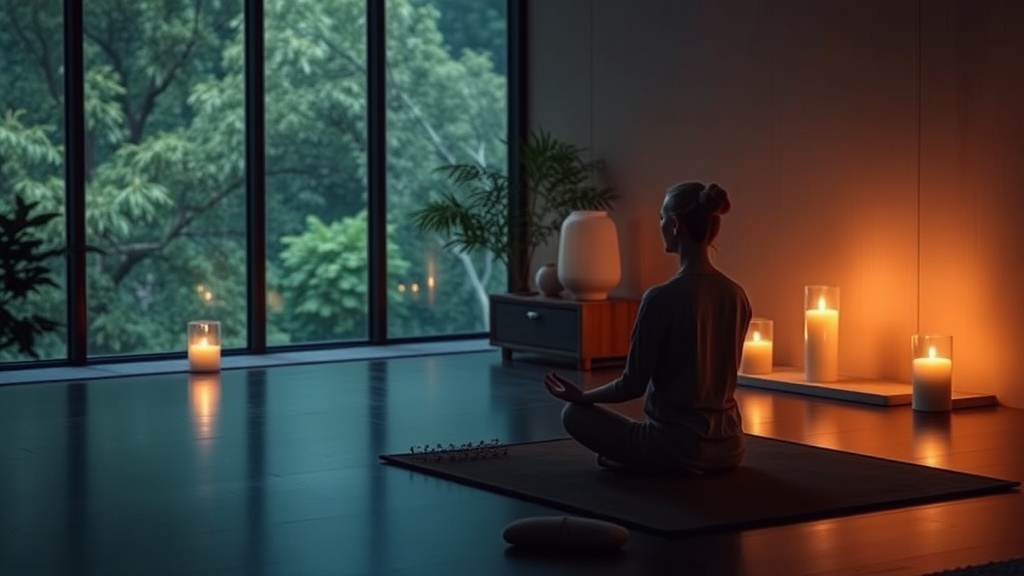
How to Design a Meditation Space That Invites You to Sit Down

What Makes a Physical Space Feel Calming to the Brain?
Your brain responds to environmental cues faster than you realize—studies show that within seconds of entering a room, your nervous system begins adjusting based on what you see, smell, and feel. Researchers at the University of Minnesota found that people who meditated in designated, uncluttered spaces reported 34% more consistency in their practice compared to those who meditated wherever they happened to be. This isn't about having a perfectly styled room—it's about creating what psychologists call an "affordance," a signal that tells your mind it's time to shift gears. The same way your kitchen cues hunger or your bedroom cues sleep, a meditation space cues presence.
The fascinating part? Your designated spot doesn't need to be large. Apartment dwellers in Tokyo have practiced this for decades—carving out meditation corners in spaces smaller than a closet. What matters is intentionality. When you create a space specifically for stillness, you're not just organizing cushions—you're building a visual promise to yourself. And here's the unexpected truth: the simpler your space, the more powerful it becomes. Extraneous objects become distractions. A single candle on a small table often outperforms an elaborate setup that requires twenty minutes of preparation.
Where Should You Put Your Meditation Space if Your Home is Small?
Most people delay creating a meditation area because they're waiting for the "perfect" spare room that doesn't exist. Stop waiting—you need approximately three square feet. Seriously. That's roughly the size of a standard meditation cushion plus leg room. Look for dead zones in your home: that awkward corner by the window, the space between your bed and the wall, even a wide closet shelf if you remove the doors. The key criteria aren't square footage—they're traffic patterns and light.
Avoid high-traffic pathways where family members or roommates will constantly pass through. You want peripheral privacy, even if total isolation isn't possible. Natural light helps enormously—morning light, in particular, supports alert relaxation—but a small lamp with a warm bulb works perfectly well. If you live with others, consider noise-cancelling headphones as part of your space rather than viewing them as a compromise. They function as a portable boundary, signaling to others (and yourself) that you're unavailable for the next ten to twenty minutes.
Some of the most effective meditation corners I've encountered were surprisingly humble: a folded blanket on a balcony, a specific chair positioned to face away from the television, even a bathroom floor setup for those desperate minutes before the household wakes up. The common thread wasn't aesthetics—it was consistency. The cushion lived there. It didn't get moved for laundry folding or temporary storage. That permanence matters more than Pinterest-worthy styling.
What Objects Actually Belong in a Meditation Space?
Walk into any meditation supply store and you'll face an overwhelming array of bells, cushions, statues, and aromatherapy devices. Resist the urge to accumulate. Start with the absolute minimum: something comfortable to sit on and a timer. That's it. Your sitting surface should elevate your hips above your knees—this reduces strain and helps maintain alert posture. A firm cushion, a folded blanket stack, or even a yoga block work fine. Avoid anything so plush that you sink into sleep.
After those basics, add elements strategically based on what actually helps YOU focus. Some people benefit enormously from a visual focal point—a small plant, a meaningful stone, a plain wall painted in a calming color. Others find visual elements distracting and prefer facing a blank corner. Experiment. There's no universal formula. Sound is another variable: a small singing bowl can mark the beginning and end of sessions with satisfying clarity, but it's optional. So is incense or essential oil diffusers—wonderful if you enjoy them, unnecessary if scents trigger headaches or allergies.
The most underrated object in a meditation space? A small notebook and pen placed just outside your sitting area. Not for journaling during meditation—that's a distraction—but for the thirty seconds after, when insights often surface. Capturing them immediately prevents the mental loop of "don't forget that thought" during your next sit. Keep it simple, keep it functional, and most importantly—keep it honest. If your meditation space starts feeling like a display case rather than a practice area, you've missed the point entirely.
How Do You Maintain Consistency Once the Space is Built?
Building the space is the easy part—maintaining the habit is where most people falter. Here's the practical reality: your meditation area will occasionally collect laundry, paperwork, or random household debris. Life happens. The difference between people who sustain their practice and those who abandon it isn't perfection—it's recovery speed. When your space gets colonized by daily life, reclaim it quickly. Don't let temporary messes become permanent territorial losses.
Set a weekly "space reset"—five minutes to tidy, straighten, and refresh your meditation corner. This ritual serves double duty: it maintains the physical space and reinforces your psychological commitment. Some practitioners keep their meditation cushion visible at all times as a persistent invitation. Others (especially those in small shared spaces) prefer tucking their setup into a basket or closet after each session. Both approaches work—the key is intentionality, not visibility. If out-of-sight means out-of-mind for your personality, keep things visible. If visual clutter creates mental clutter, develop a quick stow-and-retrieve system.
Consider the environmental cues beyond your designated spot. What happens in the ten minutes before you reach your cushion? Your pre-meditation routine matters enormously. Some people light the same candle, signaling transition in a way that becomes Pavlovian over time. Others perform a brief physical sequence—three deep breaths, shoulder rolls, a glass of water—to mark the boundary between "doing" and "being." These micro-rituals bridge the gap between your ordinary life and your sitting practice.
Can You Create a Meditation Space Without Buying Anything?
Absolutely—and there's something powerful about resourcefulness. The most profound meditation spaces often emerge from constraint rather than abundance. Start by interrogating what you already own. That firm decorative pillow from your couch? Meditation cushion. The timer on your phone? Perfect (just enable Do Not Disturb). A plain wall or window? Focal point achieved. The essentials of meditation space design have nothing to do with consumerism and everything to do with intention.
Repurpose household items creatively. A stack of hardcover books becomes a makeshift meditation bench. A clean towel folded thickly substitutes for a cushion. Your kitchen timer works as well as any meditation app. The goal isn't aesthetic perfection—it's functional separation. When you sit in your designated spot, even if that spot is simply a specific chair rotated away from your desk, you're signaling to your brain that something different is happening now. That signal costs nothing but attention.
If you do invest in one item, make it your sitting surface. Physical discomfort derails more meditation sessions than wandering minds ever will. A numb foot, an aching hip, a slumping spine—these aren't "part of the practice" for beginners; they're obstacles to consistency. Proper meditation posture matters not because of rigid tradition but because sustainable practice requires physical sustainability. Your body should feel supported enough that it doesn't demand constant attention, freeing your mind to do the actual work of meditation.
"The best meditation space is the one you actually use—not the one you keep meaning to create someday."
How Does Your Space Evolve as Your Practice Deepens?
Here's what nobody tells beginners: your relationship with your meditation space will change. In the first months, you might need every environmental advantage—silence, solitude, the right cushion angle. As practice matures, you develop what teachers call "portable presence." The bus seat becomes workable. The noisy airport gate becomes possible. Your designated home space shifts from necessity to luxury—a supportive foundation rather than a strict requirement.
This evolution should inform how you design. Don't over-engineer for your beginner self in ways that create dependencies. If your practice requires total silence, perfect temperature, and specific lighting, you've built a fragile system. Build instead for adaptability. Practice occasionally in imperfect conditions—slightly noisy, slightly uncomfortable—to develop resilience. Your home meditation space becomes the training ground where you build the skills to meditate anywhere, not the fragile bubble that falls apart when conditions change.
The deepest practitioners I know share a common trait: they can sit anywhere, but they still cherish their dedicated spaces. There's no contradiction there. The advanced meditator who maintains a beautiful home altar isn't dependent on it—they're honoring it. They've learned that environment matters, but it doesn't control the practice. Your space supports you; it doesn't define you. Build something that invites you in, that makes sitting down slightly easier than staying up, and that grows with you as your practice evolves. Start today—three square feet, one cushion, one intention. The benefits of consistent practice accumulate whether your space is minimalist or elaborate, purchased or repurposed, permanent or portable. What matters is showing up.